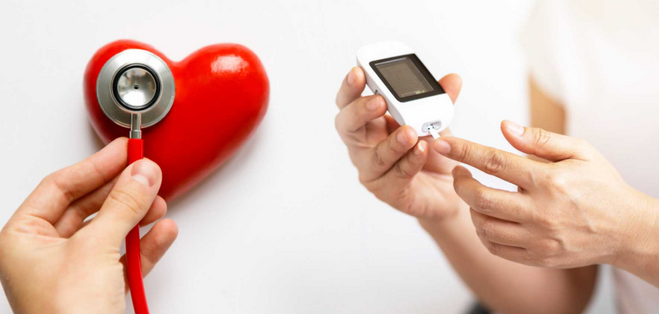
Heart
High blood sugar caused by diabetes can damage blood vessels by hardening and narrowing the arterial walls, as well as affecting the nerves that control the heart and blood vessels. Over time, diabetic patients are more susceptible to cardiovascular diseases such as coronary artery disease (CAD), stroke, and peripheral artery disease (PAD). These vascular and neurological damages can lead to heart disease, myocarditis, or even heart failure. Therefore, managing the blood sugar is crutial for people (elderly) with diabetes due to the fact that “people with diabetes are nearly twice as likely to have heart disease or a stroke compared to those without diabetes."
Symptoms:
-
Intermittently chest pain or pressure
-
Tychapynia (shortness of breath)
-
Feeling tire
-
Sweating or dizzy
-
Indigestion or churn (stomach discomfort)
-
Shoulder, back, neck, arm(s), and jaw pains or discomfort
Ways to low down the risk of heart disease or stroke:
ABCS
A = A1C Test
B = The blood pressure
[Excess of blood pressure would overload heart, leading to heart disease or stroke, as well as damages on kidneys and eyes. So the desire goal for most of the diabetes patients is less than 140/90 mmHg.]
C = Cholesterol
[Cholesterol accumulation may cause heart disease or stroke. If the test shows that it is too high and you have LDL (the “bad” cholesterol), take medicine to lower your cholesterol level.]
S = Smoking cessation
[Since both smoking and diabetes narrow blood vessels, placing a heavier burden on the heart. So quitting smoking is especially important for people with diabetes to reduce the risk of heart disease, stroke, nerve, kidney and eye disease, amputations, as well as improve blood sugar, blood pressure, and cholesterol.]


